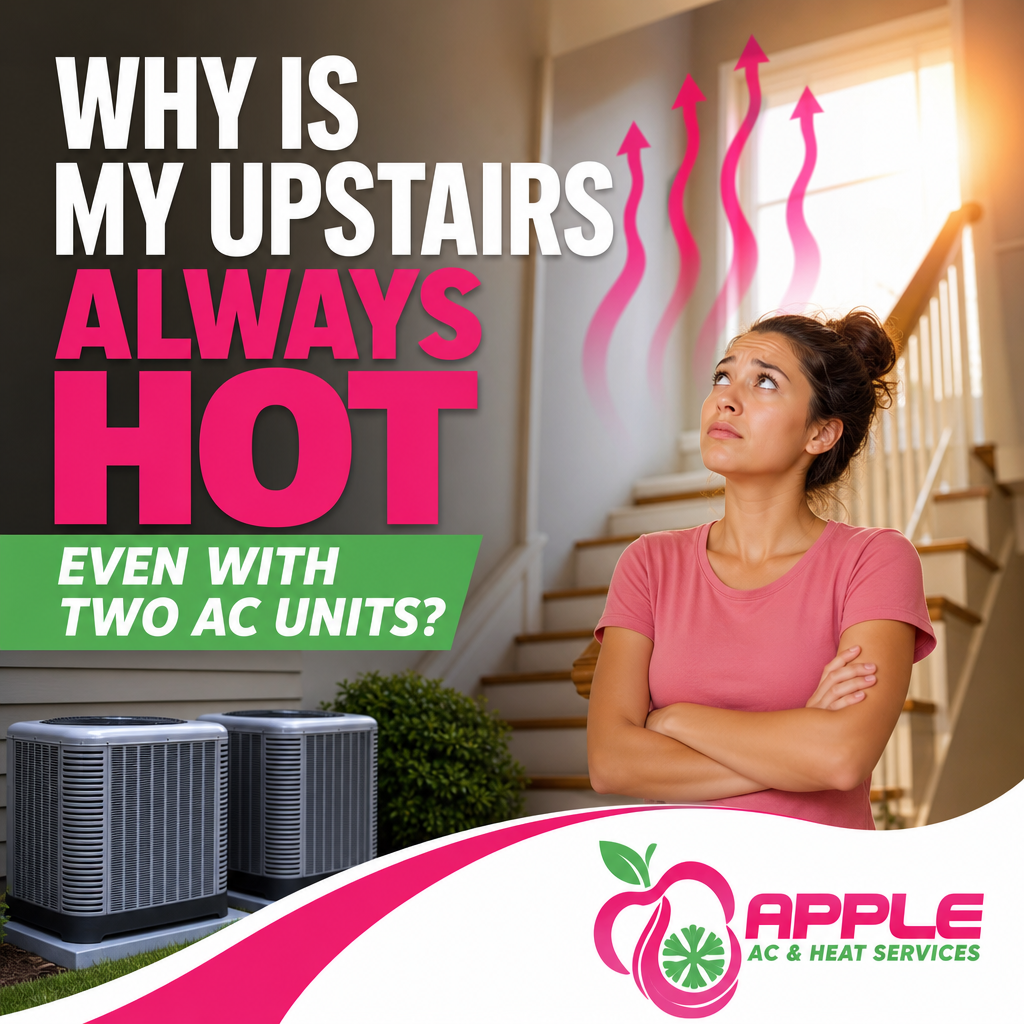

Is your upstairs always hot even with two AC units? Apple AC & Heat helps Texas homeowners find the airflow, ductwork, zoning, and system performance issues that keep second floors uncomfortable.
If your upstairs stays warm while the downstairs feels fine, the problem is usually not as simple as turning down the thermostat. Heat rises, attic temperatures soar, ductwork loses air, and two AC systems still need proper sizing, airflow, insulation, and maintenance to cool evenly. Apple AC & Heat provides honest AC repair, HVAC troubleshooting, maintenance, and system recommendations to help restore steady comfort without guesswork.
Upstairs hot with two AC units during Texas summer
A second floor naturally absorbs more heat than the lower level. Sun exposure, roof heat, attic temperatures, and poor insulation can make upstairs rooms several degrees warmer. During extreme Texas weather, even two AC units may struggle if the upstairs system is undersized, aging, dirty, or fighting against leaky ducts.
Two systems are helpful only when both are working correctly. If the upstairs AC has weak airflow, low refrigerant, a clogged coil, a failing blower motor, or poor return air, it may run constantly without properly cooling bedrooms, offices, or bonus rooms. That is when professional air conditioning repair becomes important.
Apple AC & Heat checks the full cooling setup rather than focusing on one symptom. A complete evaluation can show whether the issue comes from the equipment, duct system, attic conditions, thermostat settings, or an installation problem.
Uneven cooling caused by airflow and ductwork problems
Uneven cooling often starts inside the duct system. Ducts hidden in attics can develop leaks, loose connections, crushed sections, or poor insulation. When cooled air escapes into the attic before reaching upstairs rooms, your AC works harder while comfort stays inconsistent.
Airflow balancing also matters. If too much air is being pushed downstairs and not enough is reaching the second floor, some rooms may stay hot no matter how low you set the thermostat. Closing vents rarely solves the issue and may increase pressure inside the ductwork, which can strain the system.
Common signs of ductwork or airflow trouble include:
- Weak air coming from upstairs vents
- One or two rooms staying much hotter than others
- High energy bills with poor comfort
- AC running for long cycles without satisfying the thermostat
- Hot or humid upstairs air despite a working system
- Dusty rooms or reduced indoor air quality
Professional HVAC maintenance can catch these problems early and help improve long-term system reliability.
AC sizing, thermostat placement, and HVAC zoning issues
If your upstairs AC unit is too small, it may not have enough capacity to handle heat gain from the attic, roof, windows, and upper-level rooms. If it is too large, it may cool too quickly without removing enough humidity, leaving the upstairs feeling sticky and uncomfortable.
Thermostat location also affects comfort. A thermostat placed near a hallway return, sunlight, electronics, or a draft may not accurately reflect the temperature in upstairs bedrooms. The system may shut off before the warmest rooms are comfortable.
HVAC zoning can help in some homes, but only when designed and installed correctly. Dampers, zone controls, duct sizing, and equipment capacity must work together. If zoning is poorly set up, it can create airflow restrictions and uneven cooling. Apple AC & Heat can inspect zoning controls, thermostat communication, and duct design to determine whether repair, adjustment, or updated AC installation options make sense.
Attic insulation and heat gain affecting upstairs comfort
Many upstairs cooling problems are connected to the attic. When attic insulation is thin, compressed, damaged, or poorly installed, heat transfers into ceilings and upper rooms throughout the day. Your AC may be cooling the air, but the structure keeps radiating heat back into the living space.
Air leaks around recessed lights, attic doors, plumbing penetrations, and wiring gaps can also allow hot attic air to move into conditioned areas. This makes upstairs rooms harder to cool and can increase humidity concerns.
Windows are another major factor. West- and south-facing windows can add a large heat load in the afternoon. Solar screens, window treatments, weatherstripping, and sealing gaps can reduce strain on the upstairs AC system. These building-related improvements often work best when paired with professional HVAC service.
Repair costs, efficiency, comfort, and replacement timing
Most customers want clear answers: Is this a small repair, a duct problem, or a sign that the upstairs system needs replacement? The answer depends on system age, repair history, efficiency, refrigerant type, airflow, and whether the unit is properly sized for the space.
A minor AC repair may solve the problem if the issue is a capacitor, contactor, clogged drain line, dirty coil, thermostat problem, or low airflow from a dirty filter. Larger concerns, such as leaking evaporator coils, failing compressors, major duct leakage, or repeated breakdowns, may call for a deeper conversation about repair cost versus long-term reliability.
Energy efficiency matters, but comfort and dependability matter just as much. An older system may still run, but if it cannot keep the upstairs comfortable during peak heat, it may cost more to operate while delivering less consistent cooling. Preventative HVAC maintenance helps protect performance, reduce surprise breakdowns, and keep your system ready for long Texas cooling seasons.
Emergency situations also deserve attention. If upstairs bedrooms become unsafe during a heat wave, or the system stops cooling completely, Apple AC & Heat offers emergency HVAC services for urgent comfort needs. Homeowners and businesses can also count on the team for residential and commercial HVAC services, indoor air quality solutions, heating repair, and furnace replacement when seasonal comfort issues go beyond cooling.
Choosing the right HVAC contractor is just as important as choosing the equipment. Look for technicians who inspect the full system, explain repair options clearly, avoid pressure tactics, and consider ductwork, insulation, airflow, and equipment condition before recommending replacement.
When you need help with an upstairs that stays hot
When you need answers for an upstairs that stays hot even with two AC units, Apple AC & Heat can help identify the real cause and recommend practical next steps. Your issue may involve duct leakage, weak airflow, poor insulation, thermostat problems, equipment sizing, neglected maintenance, or a system nearing the end of dependable performance.
Apple AC & Heat provides fast, dependable HVAC service with honest recommendations for homeowners and businesses. Whether you need air conditioning repair, HVAC maintenance, a second opinion on system replacement, indoor air quality support, or emergency cooling service during extreme Texas weather, the team focuses on restoring comfort and protecting long-term system performance.
Call Apple AC & Heat to schedule an inspection and find out what is keeping your upstairs too hot.