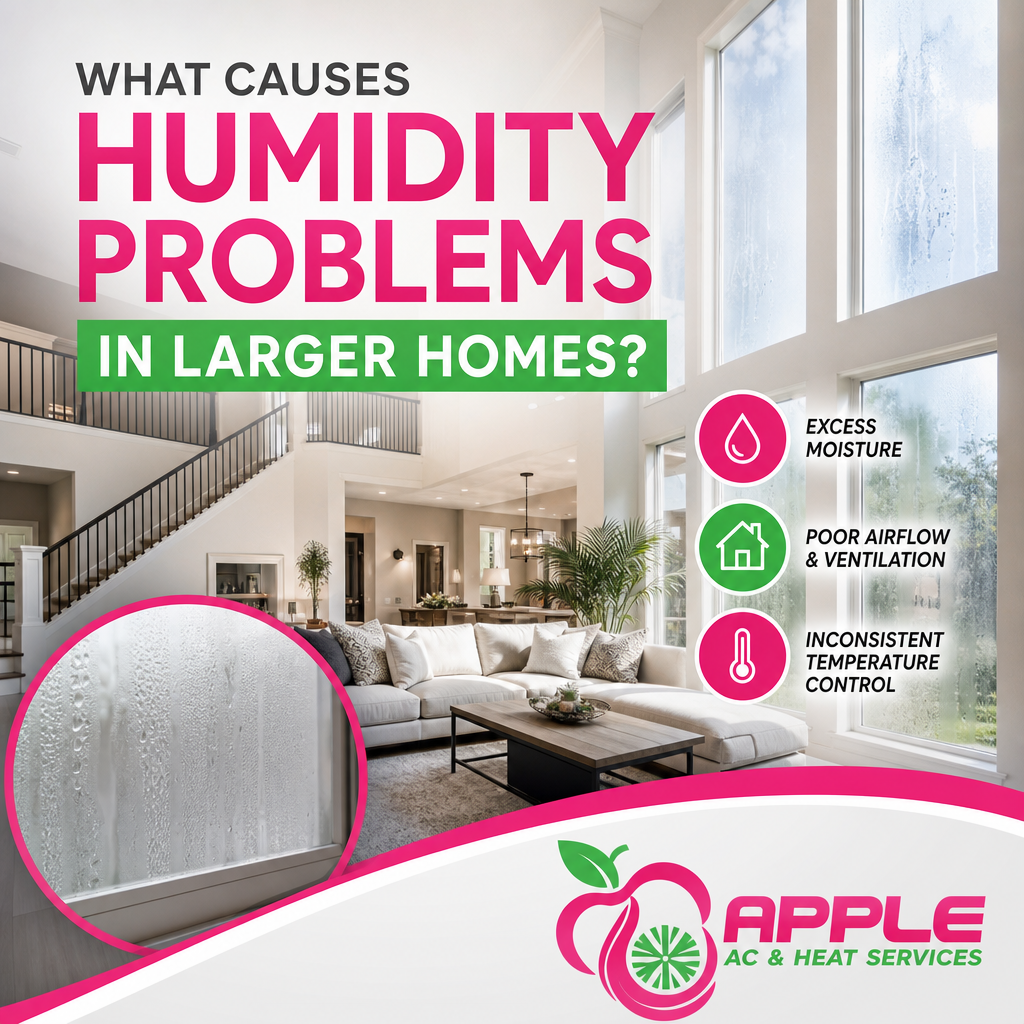

Are humidity problems in larger homes making some rooms feel sticky, musty, or harder to cool even when the AC is running? Apple AC & Heat helps identify the real cause and restore reliable whole-home comfort.
Humidity problems in larger homes often come from a mix of HVAC sizing issues, ductwork problems, airflow imbalance, poor ventilation, and limited dehumidification during long Texas cooling seasons. Larger floor plans have more rooms, longer duct runs, higher ceilings, and more exterior surfaces exposed to outdoor heat and moisture. That means your air conditioner has to do more than cool the air—it also has to remove enough moisture to keep the entire home comfortable. When one part of the system falls behind, humidity can build quickly.
Whole-home humidity control issues in large houses
A properly working cooling system removes moisture as warm indoor air passes over the cold evaporator coil. In smaller homes, that process may happen more evenly. In larger homes, the system must move conditioned air across a much wider space, including upstairs rooms, bonus rooms, guest suites, open living areas, and rooms far from the main air handler.
If the system is not designed, balanced, or maintained correctly, some rooms may feel cool while others feel damp or stuffy. This is common in larger homes with multiple levels, vaulted ceilings, oversized windows, or additions that were added after the original HVAC design.
High indoor humidity can make 74 degrees feel much warmer than it really is. It can also contribute to musty odors, condensation near vents, dust mite activity, and poor indoor air quality. Apple AC & Heat helps homeowners and businesses address humidity problems in larger homes by checking the complete HVAC system rather than treating humidity as a stand-alone issue.
Oversized AC systems and short cycling
One of the most common causes of humidity trouble is an oversized air conditioner. Many people assume a bigger AC system will cool a larger home better, but that is not always true. If the unit is too large, it may cool the air too quickly and shut off before it has removed enough moisture.
This process is called short cycling. The home may reach the thermostat setting, but the indoor air still feels heavy, damp, or clammy. Short cycling also puts extra stress on major components, which may lead to more frequent AC repair calls and reduced system performance over time.
Correct system sizing is especially important in large homes. Square footage matters, but it is only one part of the calculation. Ceiling height, insulation, sun exposure, window efficiency, room layout, duct design, and occupancy all affect the correct system size. Apple AC & Heat can evaluate whether your current system is sized and operating correctly before recommending repairs, adjustments, or a new AC installation.
Ductwork leaks, long duct runs, and poor airflow balance
Large homes usually depend on longer duct systems to carry air from the HVAC unit to each room. If ducts are leaking, disconnected, poorly insulated, or incorrectly sized, the system may lose conditioned air before it reaches the farthest spaces. In hot, humid Texas weather, duct leaks in attics or crawl spaces can also pull humid air into the system.
Uneven airflow can create pressure imbalances throughout the home. One room may receive too much cool air while another gets very little. Closed interior doors, undersized return vents, dirty filters, or blocked supply vents can make the problem worse.
Common airflow and duct-related humidity signs include:
- Rooms that feel damp even when cool
- Weak airflow from vents far from the equipment
- Musty smells near supply registers
- Condensation around vents or ceiling stains
- One floor feeling humid while another feels comfortable
- AC running often but comfort still feels inconsistent
Professional testing can help locate leaks, pressure problems, and airflow restrictions. In many cases, duct sealing, return air upgrades, system balancing, or routine HVAC maintenance can make a noticeable difference.
Poor ventilation and moisture sources inside the home
Large homes often have more bathrooms, laundry areas, kitchens, and occupied rooms. Each of these spaces adds moisture to the air. Long showers, cooking, indoor plants, damp towels, gas appliances, and frequent laundry use can all raise indoor humidity.
Ventilation matters because moisture needs a path out of the home. Bathroom exhaust fans, kitchen range hoods, attic ventilation, and fresh air systems must be properly installed and used. If exhaust fans vent into an attic instead of outdoors, they can create serious moisture concerns.
At the same time, too much uncontrolled outdoor air can also cause humidity problems. Leaky windows, gaps around doors, unsealed attic openings, and poorly sealed recessed lighting can allow humid outdoor air to seep inside. The goal is controlled ventilation—not random air leakage. Apple AC & Heat can evaluate how ventilation and HVAC performance work together and recommend practical indoor air quality solutions for better comfort.
Thermostat settings, zoning systems, and uneven room temperatures
Large homes often use multiple thermostats, dampers, or zoning systems to manage comfort in different areas. Zoning can work very well when installed and calibrated correctly. If dampers, controls, sensors, or bypass ducts are not working properly, humidity may increase in certain parts of the home.
Thermostat habits also matter. Setting the temperature too low may not solve humidity if the system is short cycling or airflow is poor. Constantly adjusting thermostats throughout the day may also keep the system from running in a steady, efficient pattern.
Smart thermostats, variable-speed systems, and whole-home dehumidifiers can help, but only when matched to the home’s actual needs. For some properties, the right answer may be system recalibration. For others, the solution may involve ductwork improvements, equipment upgrades, or ongoing residential and commercial HVAC services to keep all zones operating correctly.
Dirty coils, clogged filters, and neglected HVAC maintenance
Moisture removal depends heavily on clean airflow and a properly functioning evaporator coil. When filters are clogged, coils are dirty, blower components are dusty, or drain lines are restricted, the AC system may struggle to remove humidity. The unit may still run, but performance drops.
A dirty evaporator coil can affect heat transfer and moisture collection. A clogged condensate drain can cause water backups, odors, and system shutdowns. Low refrigerant, blower motor issues, or failing controls can also interfere with cooling and dehumidification.
Routine maintenance is one of the best ways to protect comfort in a large home. Apple AC & Heat checks key system components, looks for early warning signs, and helps prevent minor issues from becoming expensive breakdowns. Preventative care supports better system reliability, improved airflow, and more consistent humidity control during extreme Texas weather.
HVAC costs, comfort, efficiency, repairs, and replacement timing
Most homeowners want to know whether humidity problems mean they need a repair, a new system, or a dehumidifier. The answer depends on the cause. A clogged filter or blocked drain may be simple to correct. A duct leakage problem, failed blower motor, or improperly sized unit may require a more detailed solution.
Energy efficiency is another major concern. When indoor humidity stays high, people often lower the thermostat to feel comfortable. That can increase energy use without solving the moisture issue. A system that removes humidity properly may help the home feel more comfortable at a moderate temperature setting.
Reliability matters as well. If your system runs constantly, short cycles, makes unusual noises, or struggles during peak summer heat, scheduling service early can reduce the risk of sudden failure. Apple AC & Heat provides honest recommendations for repair, maintenance, replacement timing, heating repair, furnace replacement, and emergency HVAC services when comfort or safety cannot wait. A trustworthy HVAC contractor should explain your options clearly, discuss expected performance, and help you make a practical choice for your home or business.
When you need humidity help for a larger home
When you need help with humidity problems in a larger home, Apple AC & Heat looks at the full comfort picture: equipment size, airflow, ductwork, ventilation, thermostat control, maintenance history, and indoor air quality. That complete approach helps uncover the real reason your home feels damp, sticky, or unevenly cooled.
Our professional technicians provide fast, dependable HVAC service for residential and commercial properties, including AC repair, AC installation, HVAC maintenance, indoor air quality solutions, and emergency heating and cooling support. If your larger home is uncomfortable during Texas heat, Apple AC & Heat can help you find a practical solution that supports comfort, efficiency, and long-term system performance.