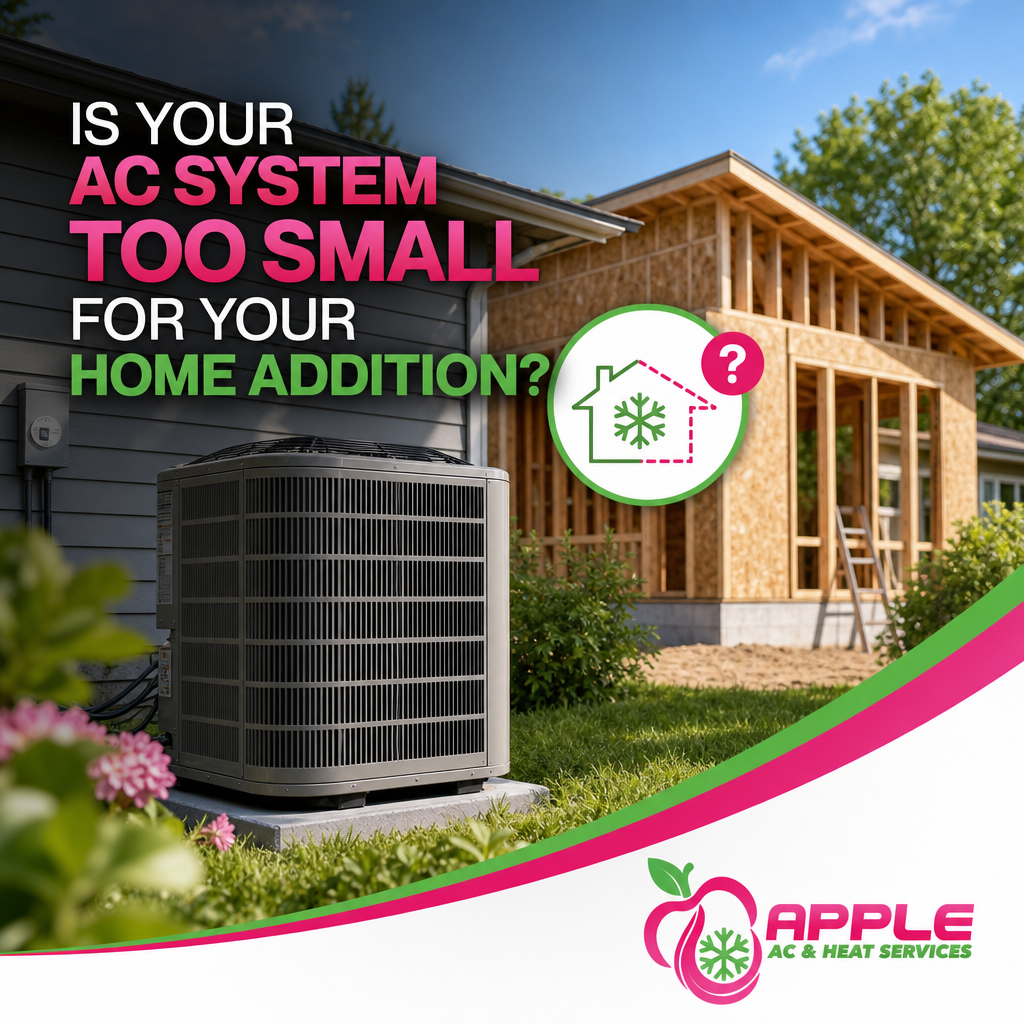

Is your AC system too small for your home addition, leaving new rooms hot, humid, or uncomfortable while Apple AC & Heat helps restore reliable indoor comfort?
Adding square footage to your home is exciting, but it can put unexpected pressure on your cooling system. If your new bedroom, office, sunroom, garage conversion, or expanded living area never feels as comfortable as the rest of the house, your current AC may not have enough capacity to handle the added load. Apple AC & Heat helps homeowners evaluate system size, ductwork, airflow, energy efficiency, and long-term comfort needs before recommending air conditioning repair, equipment upgrades, or a new AC installation.
Signs your air conditioner is undersized after a home addition
One of the first signs of an undersized AC system is uneven cooling. The original part of your home may feel comfortable, while the new addition stays warm, sticky, or slow to cool down. This often happens because the existing equipment was sized for the original square footage, not the added space.
You may also notice the system running much longer than it used to. A properly sized air conditioner should cycle in a balanced pattern, cooling your home without running constantly. If your AC rarely shuts off during Texas heat, it may be struggling to keep up with the extra cooling demand.
Other warning signs include higher energy bills, weak airflow in the addition, frequent thermostat adjustments, and humidity problems. If these issues began after construction, the home addition may have changed your cooling needs enough to require professional HVAC evaluation.
How home additions change AC load calculations
A home addition affects more than square footage. Cooling load depends on ceiling height, insulation quality, window size, sun exposure, building materials, room use, and airflow design. A bright room with large windows facing direct afternoon sun may require more cooling than a shaded room of the same size.
This is where a professional load calculation matters. Guessing based only on square footage can lead to comfort problems and wasted energy. An oversized system may short cycle, while an undersized system may run constantly and still fail to cool your home properly.
Apple AC & Heat looks at the full picture, including your existing equipment, duct layout, thermostat placement, and the way your household uses the new space. This helps determine whether you need duct adjustments, zoning, repairs, or AC installation for a system better matched to your home.
Common airflow problems in new rooms and converted spaces
Sometimes the AC unit itself is not the only problem. Ductwork may be too small, poorly connected, or not designed to serve the new area. If the addition was connected to the original duct system without proper airflow planning, the new room may receive less conditioned air than it needs.
Poor return air design can also cause trouble. Air must circulate back to the HVAC system to be cooled again. Without enough return airflow, pressure imbalances can make some rooms uncomfortable and cause the system to work harder than necessary.
Watch for these airflow-related warning signs:
- Weak air coming from vents in the addition
- One room much hotter than nearby rooms
- Doors that seem to affect temperature or airflow
- Whistling vents or noisy ducts
- Dust buildup near supply registers
- AC running constantly without consistent comfort
A technician can inspect ducts, registers, dampers, return pathways, and static pressure to identify whether airflow upgrades can solve the issue without replacing the entire system.
AC repair versus replacement for an undersized cooling system
If your AC started struggling after a home addition, the right solution depends on system age, condition, capacity, and duct performance. In some cases, air conditioning repair may solve part of the problem, especially if low refrigerant, dirty coils, clogged filters, weak capacitors, or blower issues are reducing cooling output.
However, repairs cannot make a unit larger than it was designed to be. If your system is already operating properly but still cannot cool the added space, replacement or supplemental cooling may be the better long-term choice. This is especially true if your current equipment is older, needs frequent repairs, or uses more energy than expected.
Apple AC & Heat provides honest recommendations, so you understand whether repair, duct improvements, zoning, or replacement makes the most sense. The goal is not just to cool one room for a few days, but to create dependable comfort during long stretches of extreme Texas weather.
Ductless mini split options for home additions
A ductless mini split can be a practical solution when one new area needs dedicated cooling. These systems are often used for garage conversions, sunrooms, guest suites, workshops, offices, and bonus rooms where extending existing ductwork would be difficult or inefficient.
Mini splits allow temperature control in a specific area without forcing your central AC system to carry the entire added load. They can also help reduce strain on an aging central unit if the rest of the home still cools properly.
A professional technician can help determine whether a ductless system, central system upgrade, or duct redesign fits your comfort goals. The best option depends on how often the room is used, how it was built, and whether your existing HVAC system has enough remaining capacity.
Energy efficiency concerns when your AC runs too long
An undersized AC system often consumes more energy because it runs for extended periods trying to reach the thermostat setting. Even if it eventually cools the house, the added runtime can increase wear on motors, compressors, contactors, and other key components.
Long run cycles can also affect humidity control. While air conditioners remove moisture as they cool, an overwhelmed system may still leave the home feeling clammy if it cannot lower temperature effectively. That can make homeowners set the thermostat even lower, creating more strain and higher utility costs.
Routine HVAC maintenance helps keep the system clean and efficient, but maintenance cannot fully overcome improper sizing. Apple AC & Heat can check refrigerant levels, coil condition, blower performance, electrical components, and airflow to separate maintenance issues from true capacity problems.
Heating and indoor air quality needs after expanding your home
A home addition can affect heating performance as well as cooling. If your HVAC system includes a furnace or heat pump, the added space may create cold spots during winter. Apple AC & Heat also provides heating repair and furnace replacement support when expanded homes no longer stay evenly comfortable.
Indoor air quality may also change after construction. Dust, insulation particles, paint fumes, and poor ventilation can linger if the HVAC system is not properly filtered or balanced. Added square footage can alter air circulation patterns, making filtration and humidity control more important.
Our indoor air quality solutions may include better filtration, duct inspection, ventilation review, humidity control, or system cleaning recommendations. For homeowners and businesses, these details can make a major difference in comfort, air freshness, and system reliability.
What homeowners care about before upgrading an AC system
Cost is often the first concern. The price of fixing comfort problems after a home addition depends on the cause. A simple airflow adjustment or repair may cost far less than replacing equipment, while a full system upgrade may be needed if the current unit is undersized, aging, or inefficient.
Energy efficiency matters too. A new, properly sized system can help reduce unnecessary runtime compared with an older unit that struggles all day. Still, no contractor should promise unrealistic savings. The real benefit is a system designed for your actual home, with better comfort control and less strain during hot weather.
Reliability is another key factor. If your AC already needs frequent service, adding more demand can lead to more breakdowns. Preventative maintenance is important, but replacement timing should be based on system age, repair history, performance, and the cost of ongoing service.
Comfort expectations should also be realistic. A good contractor will discuss thermostat placement, duct design, insulation, windows, return air, and room usage, not just equipment size. Apple AC & Heat provides residential and commercial HVAC services, including maintenance, repairs, system replacement planning, and emergency HVAC services when cooling or heating problems cannot wait.
Choosing the right HVAC contractor matters because poor sizing or rushed installation can create years of comfort issues. Look for professional technicians who explain options clearly, inspect the full system, and recommend solutions based on your home rather than one-size-fits-all equipment.
When you need help with an AC system too small for your addition
When you need clear answers about an AC system too small for your home addition, Apple AC & Heat is ready to help. Our technicians evaluate cooling capacity, ductwork, airflow, insulation factors, indoor comfort concerns, and equipment condition before recommending the best path forward.
Whether you need AC repair, duct improvements, mini split installation, full AC replacement, HVAC maintenance, heating support, or emergency service, our team focuses on dependable solutions built around your comfort and long-term system performance.
If your new space never feels right, do not keep adjusting the thermostat and hoping the problem settles on its own. Contact Apple AC & Heat to schedule an HVAC inspection and get honest guidance for a cooler, more comfortable home.