
Are certain rooms in your custom home too hot, too cold, or stuffy even though your system runs often? Apple AC & Heat provides expert HVAC airflow adjustments that help custom homes maintain steady comfort, efficient performance, and reliable airflow through every room.
Custom homes often need airflow adjustments because their layouts, ceiling heights, window placement, additions, duct runs, and zoning needs are rarely standard. Even with a quality system, the air may not move evenly if the ductwork, return air, dampers, registers, or equipment settings are not properly balanced. Apple AC & Heat helps homeowners identify airflow problems, correct comfort issues, and protect long-term HVAC performance with honest recommendations and dependable service.
Custom home HVAC airflow problems and uneven room temperatures
A custom home is designed around personal preferences, not always around simple HVAC airflow patterns. Open-concept living areas, media rooms, large kitchens, home offices, bonus rooms, and split-bedroom layouts can all place different demands on the heating and cooling system. A room with tall ceilings or large west-facing windows may gain heat faster than an interior bedroom, even if both spaces are connected to the same system.
Uneven temperatures can also happen when duct runs are too long, undersized, kinked, leaking, or poorly routed. Air naturally follows the path of least resistance, so rooms closest to the air handler may receive too much conditioned air while distant rooms receive too little. Professional HVAC airflow adjustments help balance that distribution so your system is not overworking to satisfy one uncomfortable area.
In Texas weather, airflow problems become more noticeable during long cooling cycles and sudden cold snaps. A room that feels slightly warm in spring can become unbearable in August. A bedroom with weak airflow may feel chilly during a winter night. Addressing airflow early helps reduce strain on your equipment and improves comfort throughout the home.
Air balancing for custom home ductwork and room-by-room comfort
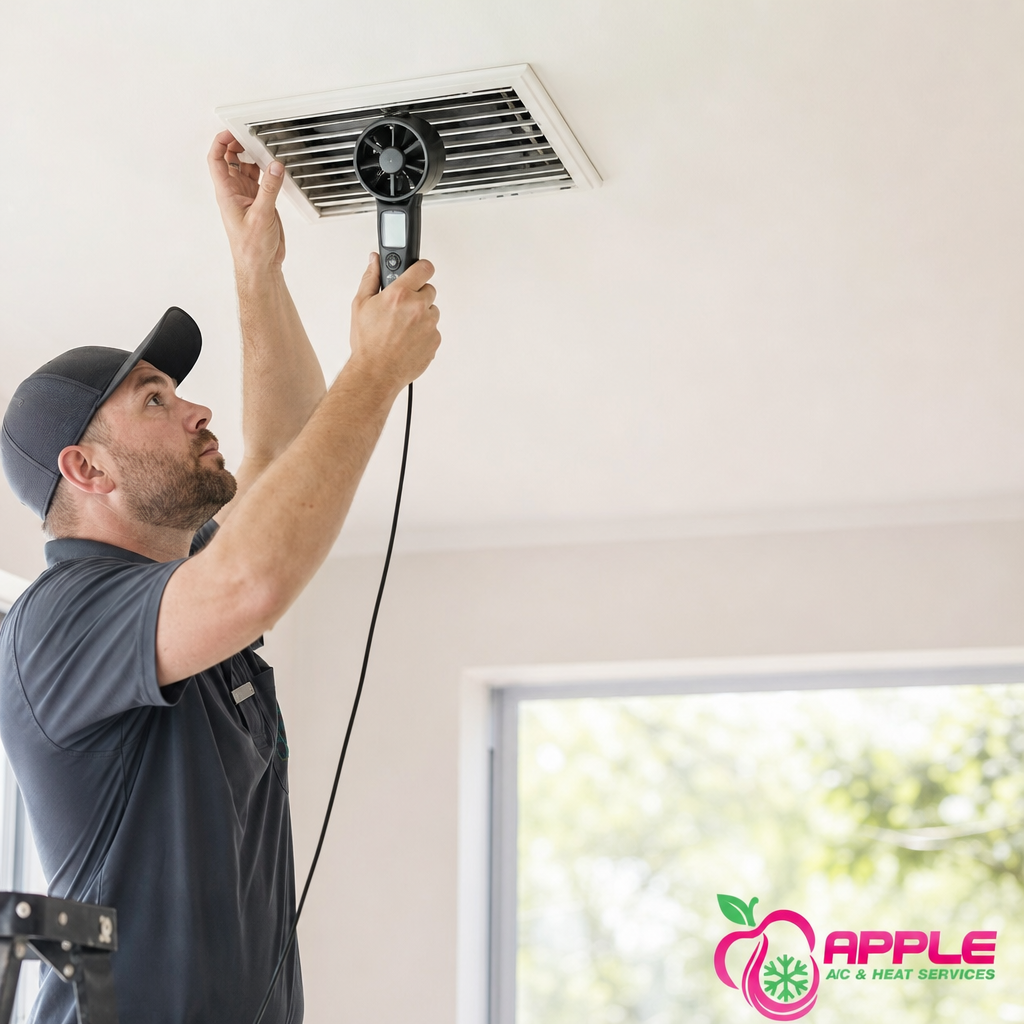
Air balancing is the process of measuring, adjusting, and fine-tuning airflow so each room receives the right amount of conditioned air. This may involve checking supply registers, return grilles, duct dampers, static pressure, blower settings, and temperature differences across the system. The goal is not simply to push more air everywhere, but to distribute air properly based on each space’s heating and cooling load.
Many custom homes have architectural features that complicate airflow. Vaulted ceilings, large glass doors, upstairs lofts, long hallways, wine rooms, workshops, and guest suites may all need special attention. If one area is consistently uncomfortable, closing vents in other rooms is usually not the best fix. That can increase static pressure, reduce efficiency, and create new problems for the blower motor or duct system.
Apple AC & Heat looks at the entire system before recommending changes. Sometimes the solution is a simple damper adjustment. Other times, the issue may involve duct leakage, poor return air design, improper equipment sizing, or a system that needs air conditioning repair to restore proper performance.
Signs your custom home needs professional HVAC airflow service
Airflow issues are not always obvious at first. Many homeowners assume the AC or heater is failing when the real issue is poor distribution. A system can be cooling or heating properly at the equipment level but still leave certain rooms uncomfortable because the air is not reaching those areas as intended.
Common signs that your home may need airflow adjustments include:
- Hot or cold rooms that never match the thermostat setting
- Weak airflow from certain vents
- Whistling, rattling, or noisy ductwork
- Doors that slam or resist closing when the system runs
- Dust buildup near registers or return grilles
- Short cycling or long run times
- High indoor humidity during cooling season
- A thermostat that satisfies one area while other rooms stay uncomfortable
- Frequent calls for heating repair or cooling service without lasting comfort improvement
These symptoms can point to duct restrictions, blower problems, return air limitations, dirty coils, clogged filters, or zoning issues. A skilled technician can test the system instead of guessing. That matters because the wrong adjustment may create additional wear or reduce efficiency.
AC installation, zoning, and airflow design in custom homes
Proper AC installation plays a major role in airflow performance. If the system is oversized, it may cool the area near the thermostat too quickly and shut off before distant rooms are comfortable. If it is undersized, it may run constantly and still struggle during peak heat. Custom homes benefit from careful load calculations, duct sizing, zoning design, and equipment selection.
Zoned HVAC systems are common in larger custom homes because they allow different areas to be controlled separately. However, zoning must be designed and maintained correctly. Dampers, bypass ducts, variable-speed equipment, and thermostat placement all affect how well the system performs. Poor zoning can cause pressure problems, noise, and uneven comfort.
Airflow concerns should also be considered during furnace replacement, heat pump upgrades, remodels, and room additions. Adding square footage without adjusting duct capacity or return air can leave the new space uncomfortable and place extra demand on the existing HVAC system. Apple AC & Heat helps homeowners make practical decisions that support comfort, efficiency, and equipment reliability.
Indoor air quality and return airflow in custom home HVAC systems
Return airflow is just as important as supply airflow. Your HVAC system cannot deliver proper conditioned air if it cannot pull enough air back to the equipment. Custom homes sometimes have limited return grilles, blocked returns, or closed-off rooms that disrupt circulation. This can cause pressure imbalances, reduce comfort, and make the system work harder.
Poor airflow can also affect indoor air quality. When air circulation is weak, humidity, dust, odors, and airborne particles may linger longer inside the home. Leaky ducts can pull air from attics, garages, crawl spaces, or wall cavities, carrying contaminants into living spaces. That is especially concerning for households with allergies, pets, asthma concerns, or sensitive family members.
Apple AC & Heat offers indoor air quality solutions that work alongside airflow improvements. Depending on the home, recommendations may include better filtration, duct sealing, humidity control, ventilation improvements, or system cleaning. The right solution depends on the source of the issue, not a one-size-fits-all product.
HVAC maintenance for airflow, energy efficiency, and system reliability
Routine HVAC maintenance is one of the best ways to keep airflow problems from becoming expensive repairs. Dirty filters, clogged evaporator coils, worn blower components, blocked drain lines, and neglected duct issues can all reduce airflow. Over time, the system may run longer, use more energy, and struggle to keep up during extreme temperatures.
Maintenance visits also give technicians a chance to spot airflow warning signs before they become major comfort complaints. A small duct leak, weak capacitor, blower speed issue, or dirty coil can affect the entire home. With custom homes, early detection is especially valuable because the system may be serving large or complex spaces.
Energy efficiency depends on more than equipment ratings. Even a high-efficiency HVAC system can waste energy if air is leaking into the attic, rooms are poorly balanced, or the blower is fighting excessive static pressure. Proper airflow helps the system operate closer to its intended performance, which can support more consistent comfort and better long-term value.
HVAC repair costs, emergency issues, replacement timing, and contractor choice
Homeowners care about cost, comfort, reliability, and whether a repair will actually solve the problem. Airflow concerns can range from simple adjustments to more involved duct modifications. A technician may need to inspect duct sizing, test static pressure, check refrigerant performance, evaluate blower operation, inspect dampers, or review thermostat placement before giving a clear recommendation.
Emergency situations can happen when airflow restrictions cause frozen evaporator coils, overheating furnaces, weak cooling during extreme heat, or system shutdowns. Apple AC & Heat provides emergency HVAC services for urgent heating and cooling problems, but the best approach is to correct airflow concerns before they create breakdowns. Preventive care often helps reduce stress, discomfort, and unexpected service calls.
Replacement timing is another important concern. Not every airflow problem means you need a new system. In some cases, targeted duct repairs, balancing, maintenance, or controls adjustments can restore comfort. In other cases, aging equipment, poor sizing, repeated repairs, or major duct design problems may make replacement a smarter long-term option. Choosing an HVAC contractor with residential and commercial experience matters because proper diagnosis protects your comfort and budget.
When you need custom home HVAC airflow adjustments in Texas
When you need custom home HVAC airflow adjustments, Apple AC & Heat can help you get clear answers and practical solutions. Our technicians evaluate the full system, including ductwork, returns, registers, equipment performance, thermostat control, zoning, and maintenance needs. That complete approach helps uncover the real cause of uneven comfort instead of treating symptoms.
From heating repair and furnace replacement to cooling service, AC installation, maintenance, and indoor air quality support, Apple AC & Heat focuses on dependable work and honest recommendations. If your custom home has hot spots, weak vents, noisy ducts, humidity issues, or rooms that never feel right, scheduling a professional airflow evaluation is a smart next step toward better comfort and system performance.